
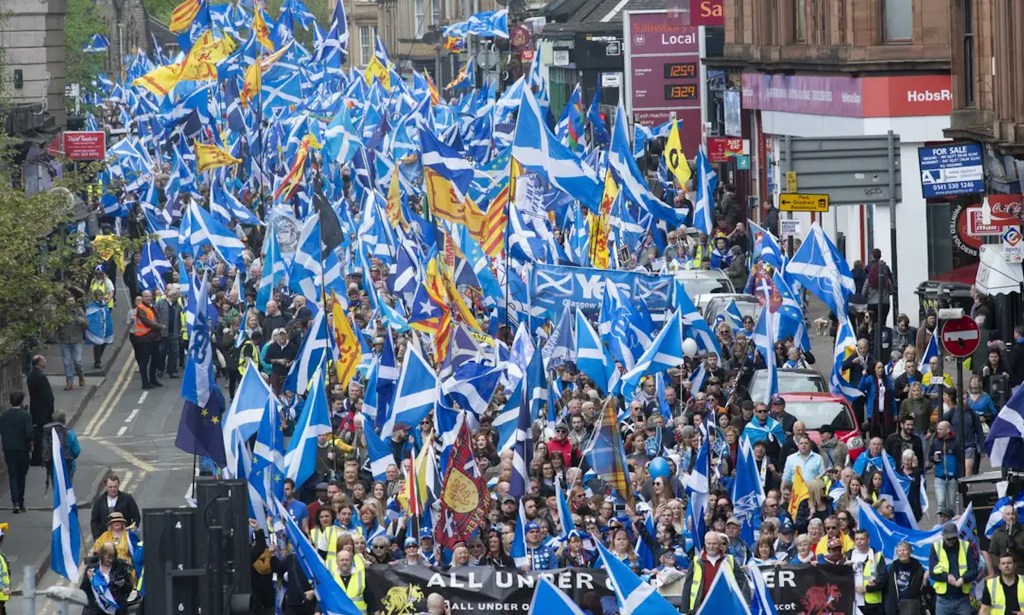
Israel’s pre-emptive strike on Iran’s nuclear program in June had the unexpected consequence of revealing an IRGC cyber program on X.
First Published: 27th June 2025
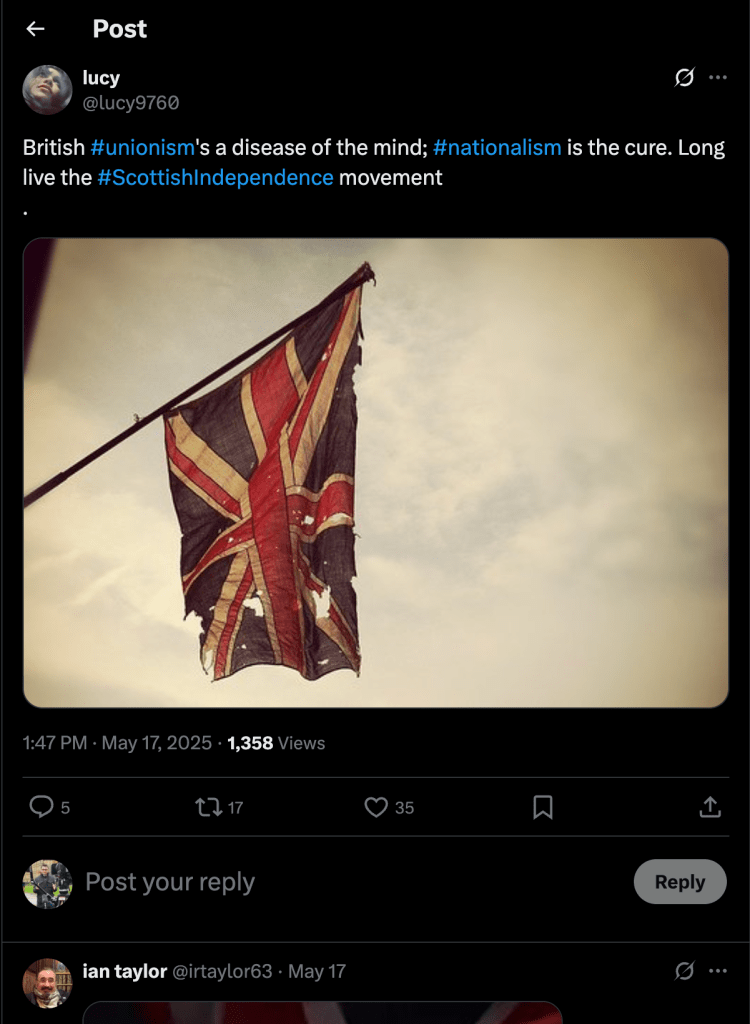
As Israeli targeted strikes rained down on Iran’s military, nuclear and cyber infrastructure on June 12th, scores of daily active social media accounts pushing Scottish Independence and anti-union sentiment fell silent.
Missiles had revealed a concerted “asymmetric warfare” effort in Tehran concerning more than 80 accounts sowing division in the UK with some 250,000 posts on highly contentious issues since 2021.
Accounts were disparaging of key figures in the public eye, like Nigel Farage and Tommy Robinson, voiced extreme criticism of Israel’s bombardment of Gaza and pushed hard for the end to the union through Scottish independence.
Experts at Clemson University’s Media Forensics Hub traced the accounts as far back as 2021- when X was still Twitter – and suggests the accounts in question gained traction with 250,000 followers and 3.2 million likes on their posts.
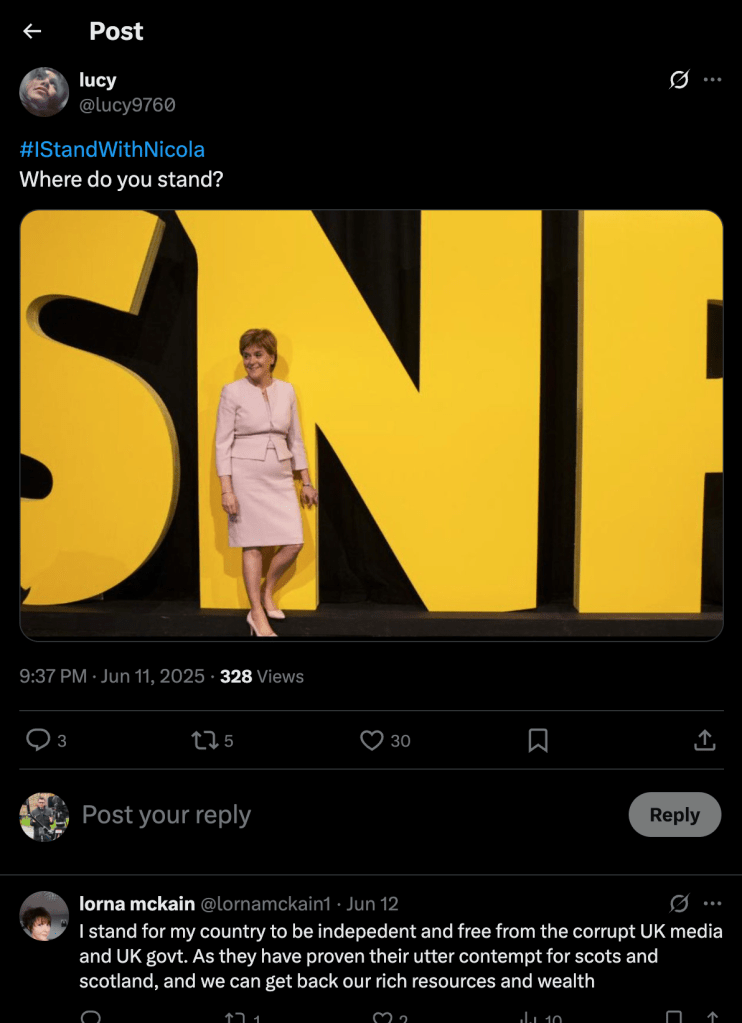
Accounts that pushed for Scottish Independence voiced support for the Scottish National Party and leaned heavily on messaging such as “England is subsidised by Scotland” and calling for Nicola Sturgeon to be the one to realise Scottish Independence.
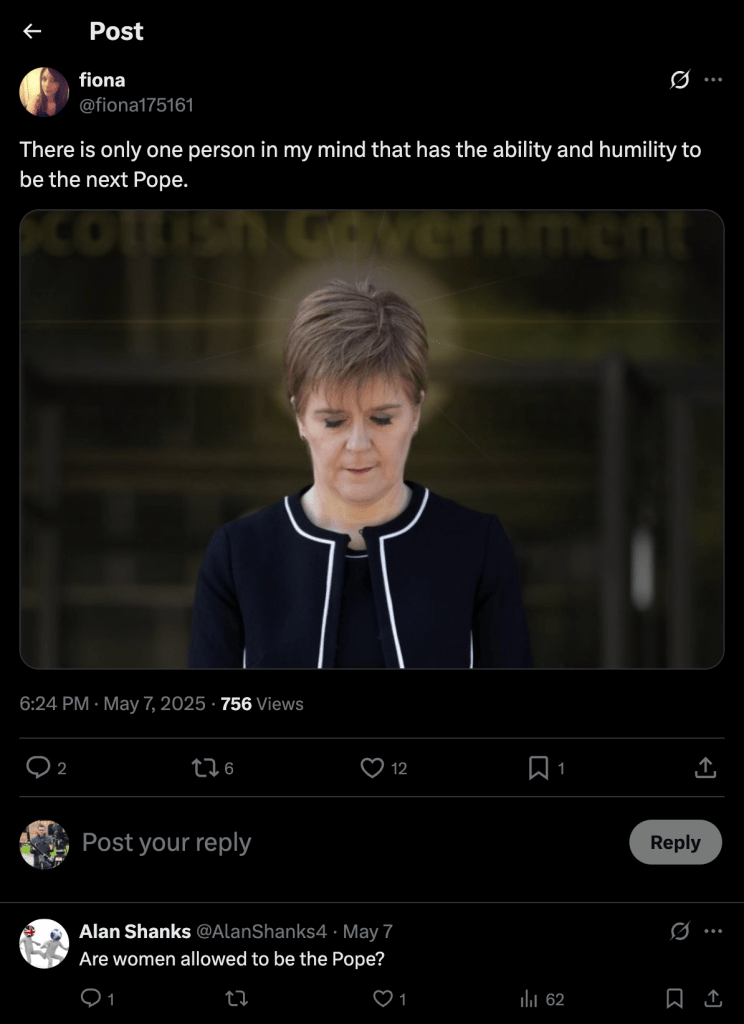
One post, from the account ‘@fiona175161’ went so far in backing the former First Minsiter, they wrote, “There is only one person in my mind that has the ability and humility to be the next Pope”, with a doctored halo around Sturgeon’s head.
See some of the IRGC bot account posts on X below:
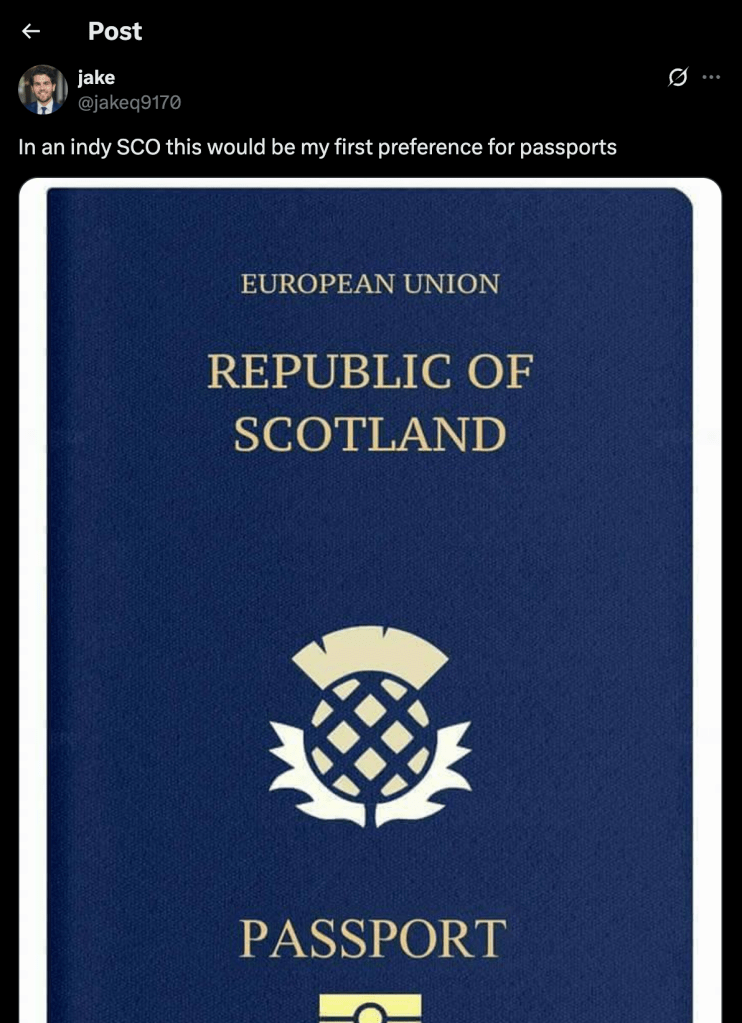
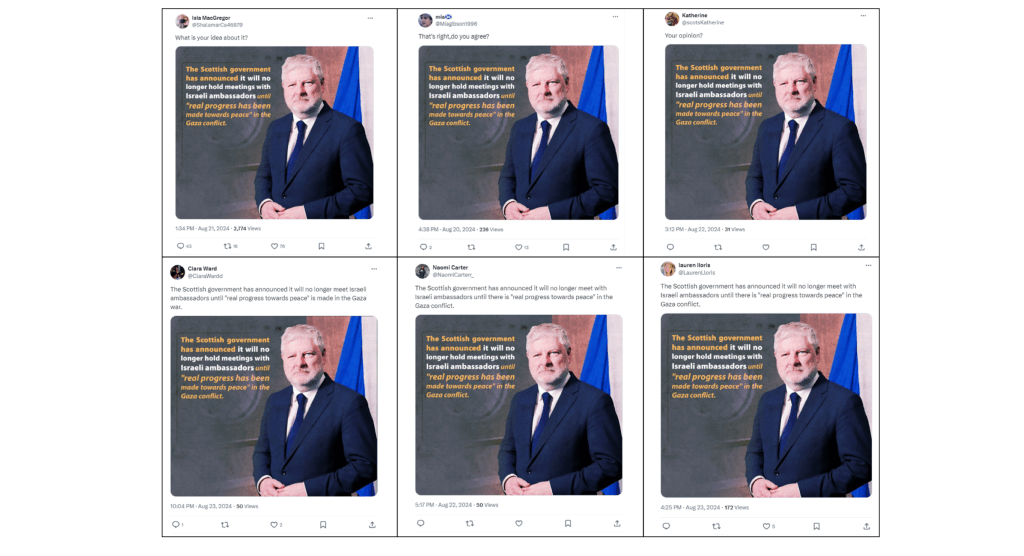
The Clemson University report detailed another post featuring an image of Cabinet Secretary for the Constitution Angus Robertson, which was tweaked and reposted by no less than six accounts over the course of three days in August 2022.
Dr Azeem Ibrahim, a Glaswegian research professor at the US Army War College, says instances of state sanctioned cyber disruption like this are extremely cost effective for hostile nations to onboard and Scottish Independence is a key target for nations conducting such operations.
He says: “Much of this came in the past from Russia, China and now we have extensive evidence of Iranian influence as well so this has been a domain where foreign powers have continually tried to stir the pot.
“This is an asymmetric warfare procedure and we’ve seen so far that in 2024 alone, Iranians had over 4% of independence traffic [on X] was coming from what we identify as the IRGC (Islamic Revolutionary Guard Corps).”
Dr Ibrahim says extensive evidence of foreign actors interfering in the online debate around Scotland’s constitutional question carries one significant risk above all else – the UK’s nuclear deterrent housed in Faslane.
“The UK is a nuclear power within NATO and the UK’s deterrent is a NATO deterrent, unlike France’s, which is purely domestic,” he said.
“Breaking up the UK will create chaos – the SNP policy has always been to not have nuclear weapons on their territory and the government in Westminster will therefore need to find another location to house these nuclear weapons and that’s not an easy thing to do.”
Dr Ibrahim also suggests an independent Scotland formerly subsidised by Westminster is likely to struggle financially, opening the door for foreign influences like China “stepping in” to offer infrastructure investment and wedging the door open.
The accounts themselves purported to reside in the UK, with 90% of them fronting as women and profiles ranging from “Ex-NHS Nurse” to affiliation with Premiership football clubs: User @Alice_Baileyy_ wrote, “LiverPool F.C. Virigil van Dijk best defender”.
Account profile pictures were found to be stolen or AI-generated.
The Scottish National Party are aware of the IRGC’s elaborate cyber warfare campaign, with Angus Robertson warning the Scottish Conservatives not to “smear” the pro-independence electorate when confronted with the revelations in the Holyrood chamber.
When pressed on the issue, First Minister John Swinney told GB News, “I think it demonstrates some of the undesirable elements of the social media environment which we’re operating in and I think that’s something we’ve all got to consider.”
We should remember that in the world of unimaginably large social media numbers, 250,000 and even 3.2 million are a drop in the ocean of British national engagement.
Nevertheless, the Clemens University’s Media Forensics Hub report offers incredible insight into the highly organised nature of a foreign power campaign to destabilise and sow discord in the United Kingdom.
 TonyMcGuire.com
Leave a comment